
Most of what you spend on a wedding disappears by midnight. The flowers wilt, the cake gets eaten, the band packs up. The photographs are the one line item that keeps paying you back, so it's strange how often couples choose a photographer the same way they choose a DJ: scroll Instagram, pick the prettiest feed, hope for the best.
This post is a better way to evaluate a wedding photographer. Rather than talk in generalities, we're going to use a real studio as the example: Katie Jaynes Photography, a husband-and-wife team based in Anderson, South Carolina. We picked them because their website does something most vendor sites don't: it tells you exactly what working with them is like, which makes it easy to show what "the right questions answered" looks like.
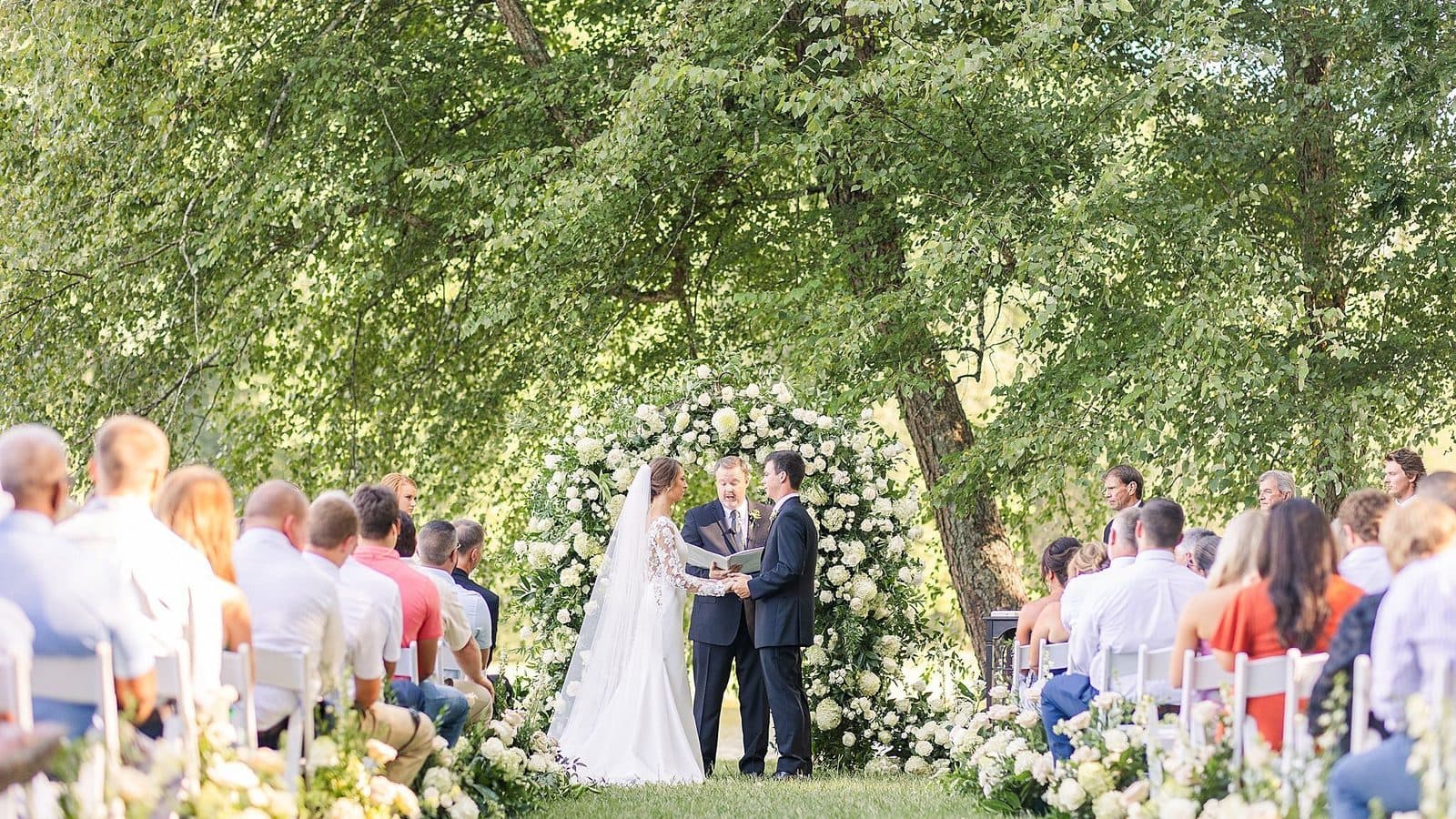
We have no business relationship with Katie and Mitchel. They're simply a clear example of what to look for. The photo above is theirs, shared with permission.
Meet Katie Jaynes Photography
Katie Jaynes has been photographing weddings since 2013. She shoots alongside her husband Mitchel, who handles candid moments, side angles, and the gear, while she leads the posed work and the timeline. They're based in Anderson, SC and photograph weddings across South Carolina, North Carolina, and Georgia, with regular work in Greenville, Columbia, and Charleston.
Their style, in their words, is "colorful, true-to-life, and classic." Their mission statement is on the homepage: they're "on a mission to make people feel important, beautiful, and powerful." Wedding investments start at $5,250 and are customized from there.
None of that is remarkable on its own. What's remarkable is that every one of those facts answers a question you should be asking any photographer. Let's go through them.
1. Can you describe their style in three words?
Katie's site says "colorful, true-to-life, and classic." That's a style you can hold up against your own taste in about five seconds. If you love moody, desaturated, film-grain editing, you know immediately she's not your photographer, and that's a good thing. You just saved both of you a discovery call.
When you look at a portfolio, try to describe it in three words yourself. If you can't, the photographer either doesn't have a consistent style yet or is chasing whatever's trending. Both are risky, because the photographer you book in year one is editing your photos in year two, and you want the same eye on both ends.
The test: open three different weddings in their portfolio. Do they look like they came from the same person? Consistency across different venues, lighting, and couples is the real skill.
2. Who else is showing up?
Katie doesn't shoot alone. Mitchel is at most weddings as a second photographer, and his job description on their site is telling: candids, alternate angles, and building rapport with guests.
Two photographers matters more than people think. During the ceremony, one can be at the front capturing your faces while the other catches your parents' reactions. During getting-ready, one can be with each of you. And if something goes wrong, there's a second professional already on site.
The test: ask whether a second shooter is included, who it is, and whether it's the same person every time. A regular partner (a spouse, a long-time associate) is worth more than a rotating freelancer who has never worked with your lead photographer before.
3. Do they care about your timeline?
This is the one couples miss. On their about page, Katie and Mitchel list "thoughtful timelines" as one of the things they promise clients, right next to flattering posing. That's not filler. A good photographer builds the timeline with you, because they know exactly how long family formals take with 30 people, when the light is best at your venue, and how much buffer to leave before the ceremony.
A photographer who doesn't ask about your timeline is planning to react to your day. A photographer who wants to help build it is planning to shape it.
The test: on your first call, ask "How do you like to be involved in the day-of timeline?" You want an answer with specifics: sunset time, a first-look decision, a family photo list.
4. Do they want to know you?
Katie's site puts a lot of weight on getting to know couples before the wedding. Their about page is full of small personal details, from Sunday naps and vanilla creamer to Mitchel's cottage cheese habit, and the intent is obvious: if they share who they are, you'll share who you are, and the photos will show it.
It sounds soft, but it's practical. Candid photography only works when people forget the camera is there, and people only forget when they're comfortable. An engagement session is the usual way photographers build that comfort. Ask whether one is included or available.
The test: after the inquiry call, do you feel like they learned something about you two, or did they just quote a price?
5. Is the experience described, not just the photos?
Look at how Katie's site talks about the day: "clear communication and a seamless experience," "stress-free and fun-loving." Those are promises about how it feels to work with them, and they're the promises to hold a photographer to.
Your photographer is with you longer than any other vendor on the wedding day. Usually eight to ten hours, often starting before your hair is done. Their personality is part of your wedding whether you like it or not. Book someone whose company you'll enjoy.
The test: read reviews for the words that describe the person, not the pictures. "Calm," "kind," "kept us on schedule," and "made my grandmother laugh" are worth more than "stunning gallery."
Planning the rest of your wedding around a photographer like this
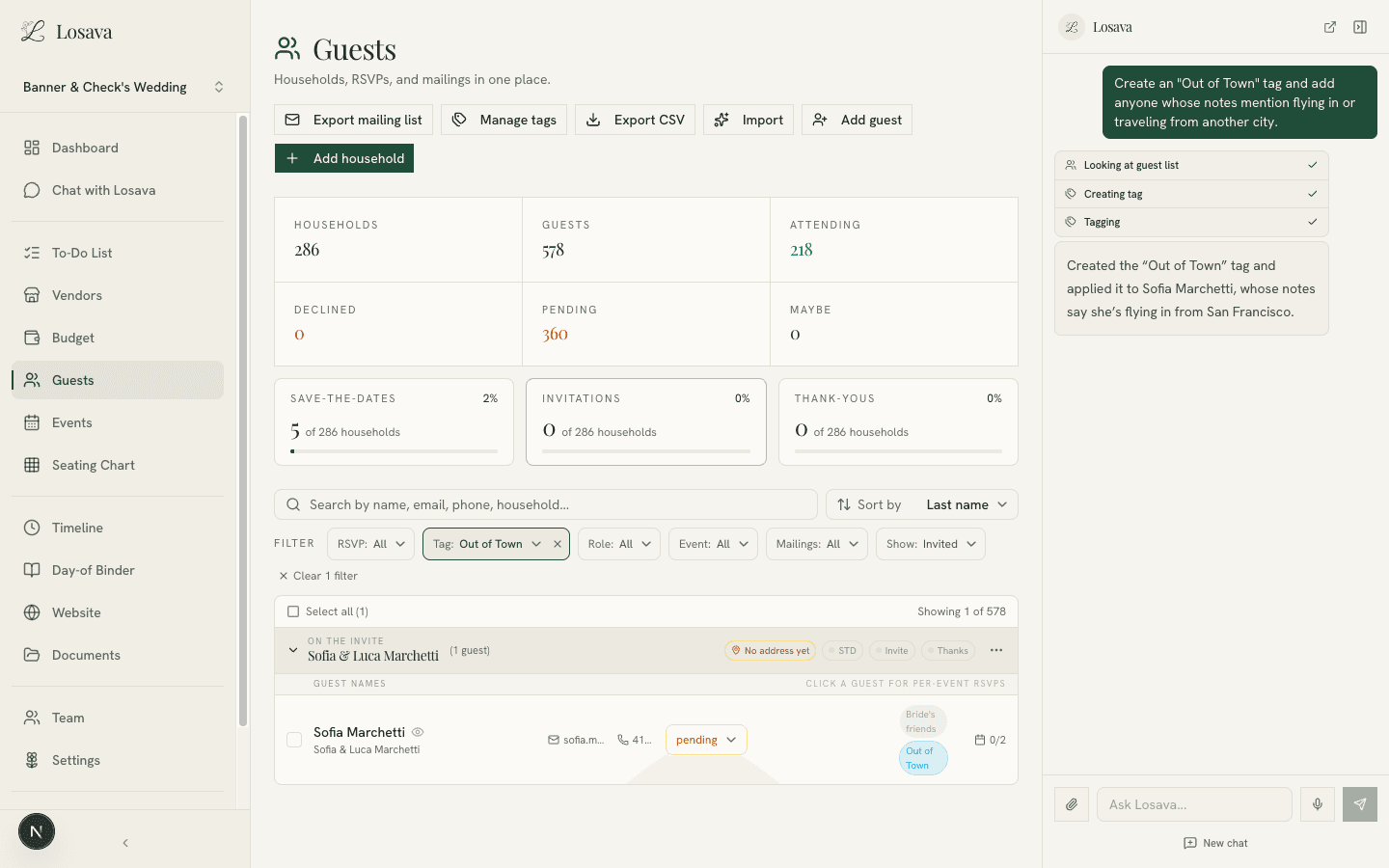
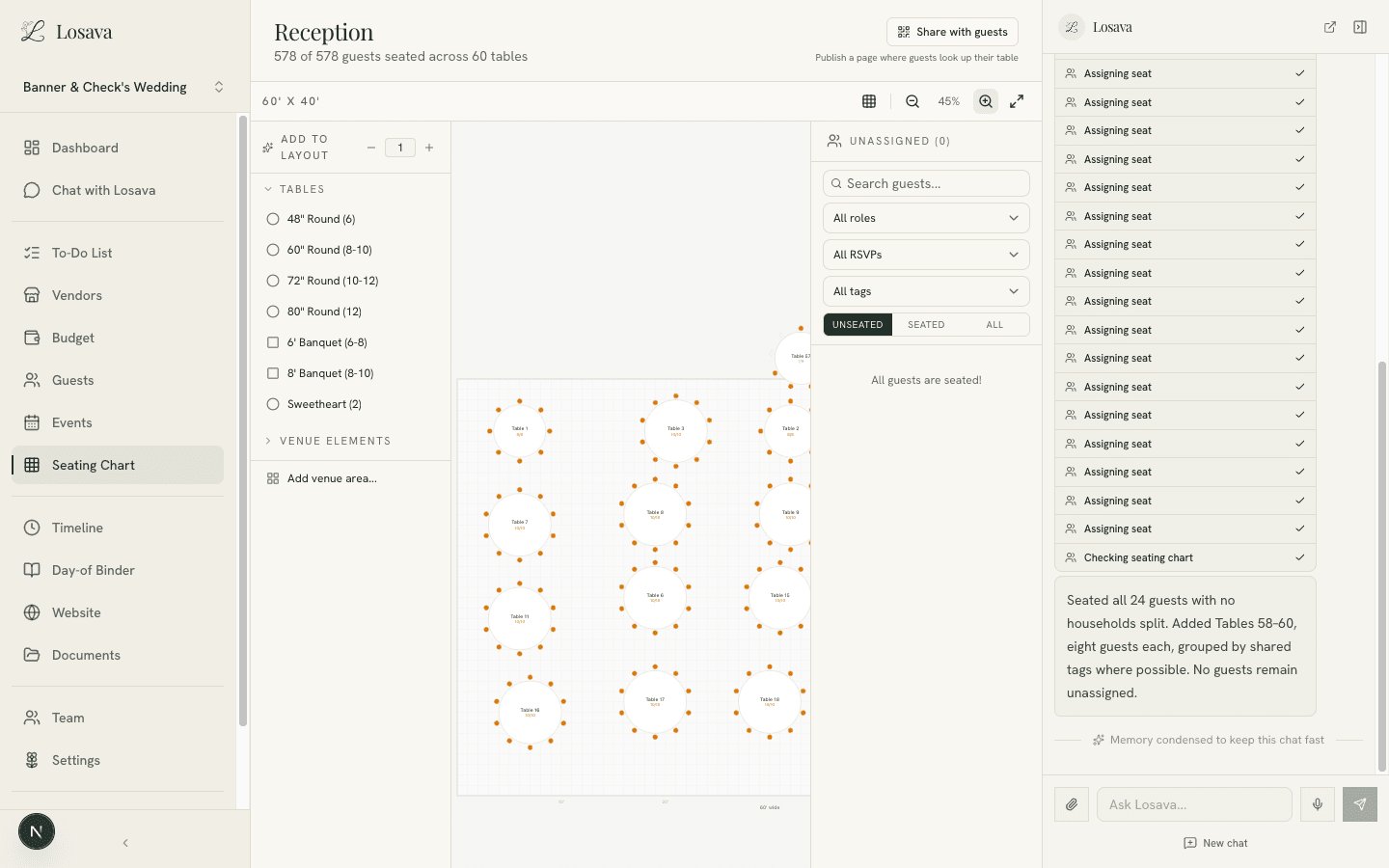
Here's where this stops being a photographer article and starts being a planning article. Booking someone like Katie affects four other parts of your wedding, and it helps to have them all in one place.
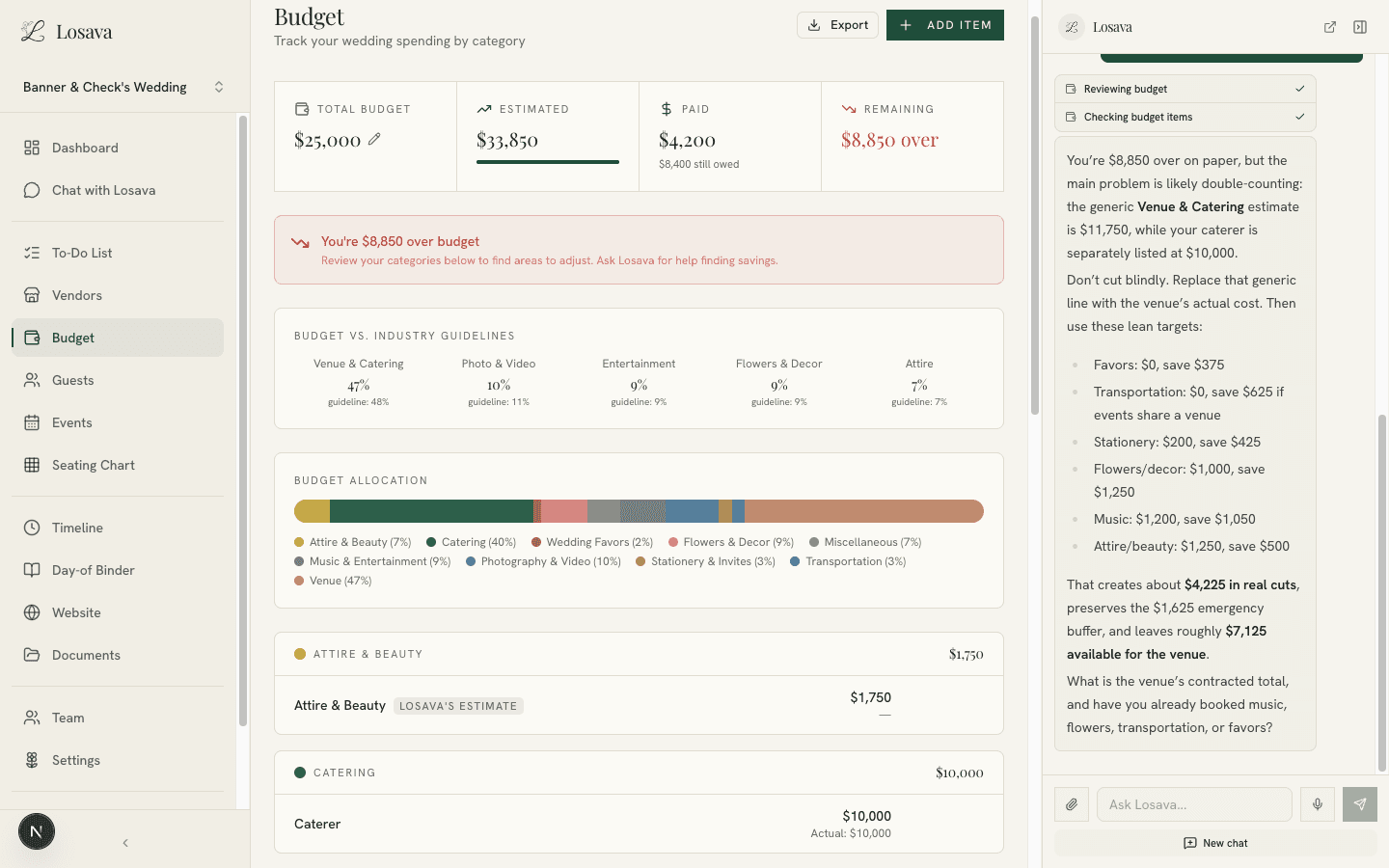
Budget. A starting investment of $5,250 is squarely in the range of an experienced two-photographer team, and it usually lands at 10 to 15 percent of a total budget. That number should exist in your budget before you inquire, not after. In Losava, photography is a category from day one. Set your estimate, and when you book, the contract total, deposit, and remaining balance become one budget line you can see next to everything else.
Vendor tracking. Photographers get booked 9 to 14 months out, so you'll probably be talking to two or three at the same time. Losava's vendor manager keeps each one's status, notes, and conversation history together, and the AI assistant can draft your inquiry email so it actually mentions your date, venue, and what you loved about their work instead of "Hi, are you available?"
Timeline. Once you've booked, you'll want to build the day-of timeline with your photographer's input. Losava's timeline builder lets you block out getting-ready, first look, ceremony, family formals, and golden hour, and the day-of binder gives your photographer, planner, and wedding party the same schedule on the day.
The family photo list. Every photographer wants this in advance, and every couple writes it at 1 a.m. the night before. Because Losava already knows your guest list, you can ask the assistant to pull "immediate family on both sides" and turn that into a shot list your photographer can work from.
Questions to ask on the inquiry call
Whether you're inquiring with Katie Jaynes or a photographer in your own area, here's the short list:
- Is a second photographer included, and who is it?
- How many hours of coverage, and what happens if the day runs long?
- How do you want to be involved in building the timeline?
- Is an engagement session included?
- How many edited images do we receive, and when?
- What's your backup plan if you're sick or a camera fails?
- Can we see two full wedding galleries, not highlights?
- What does the payment schedule look like?
Write the answers down as you go. Losava's vendor details keep them attached to the vendor so you can compare candidates side by side instead of scrolling back through email.
The takeaway
A wedding photographer is a judgment call about a person, not a product. The best studios make that judgment easy by telling you plainly who they are, how they work, and what they promise. Katie and Mitchel's site does that well, and it's a useful benchmark: if a photographer you're considering can't answer these five questions as clearly, keep asking until they do.
If you're getting married in the Carolinas or Georgia and their style speaks to you, their inquiry page is the place to start. And wherever you're getting married, the budget, vendor, and timeline pieces around your photographer are what Losava is for.
Losava helps you budget for, shortlist, and book your wedding photographer, then build the day-of timeline around them. Start planning free.